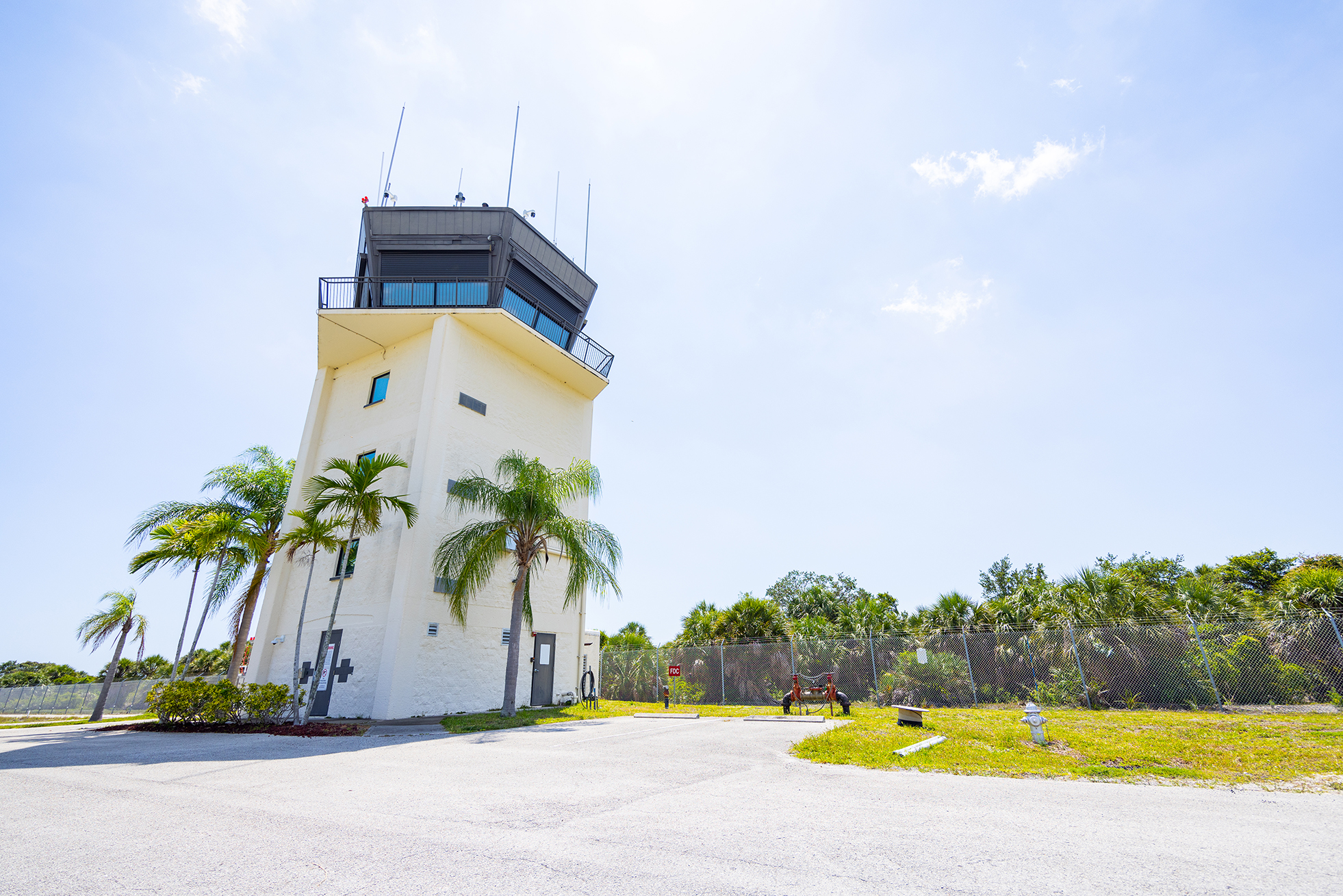


The Boca Raton Airport is home to a large population of Burrowing Owls
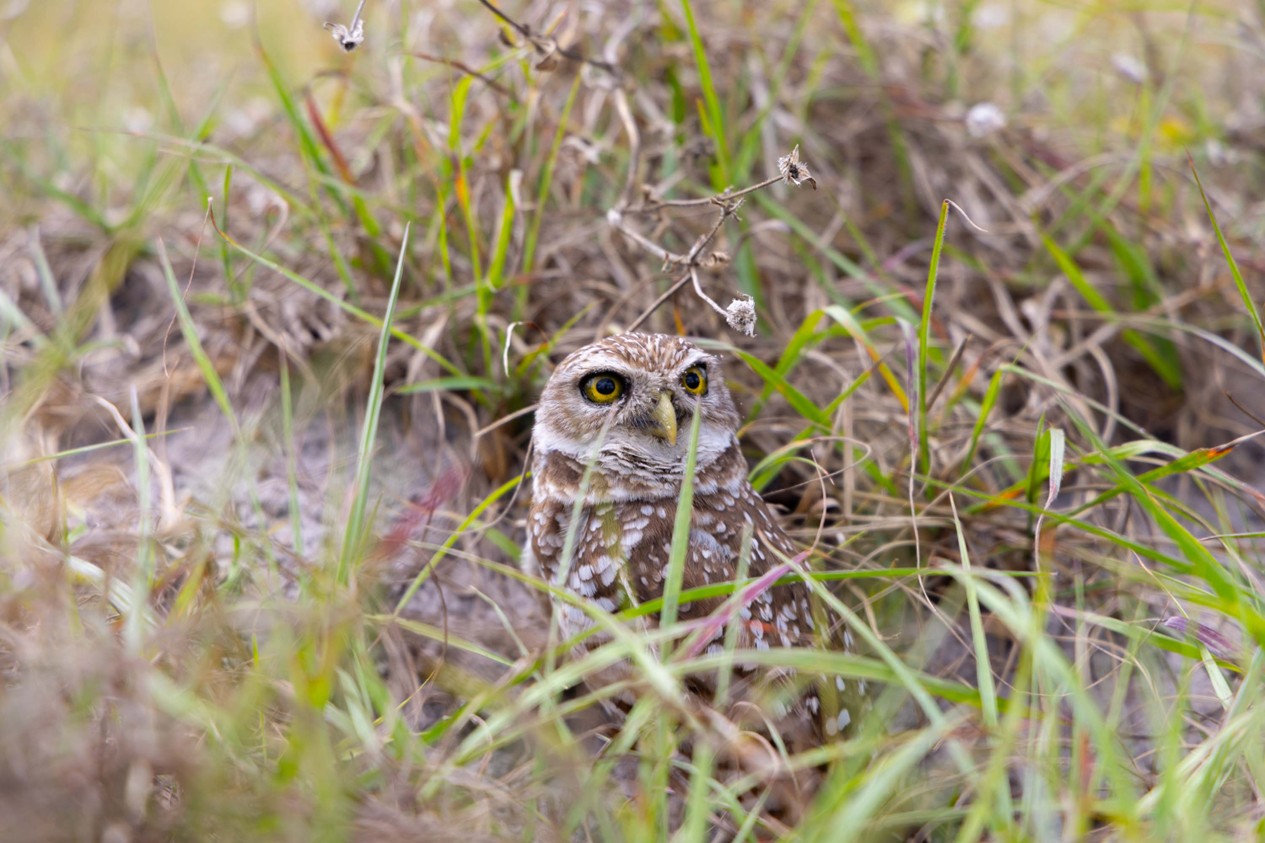
The Boca Raton Airport is home to a large population of Burrowing Owls (Athene cunicularia floridana). This petite owl, classified as State Threatened by the Florida Fish and Wildlife Conservation Commission, is attracted to open, treeless areas, such as airports. As natural prairie ecosystems have declined over the decades, these adaptive birds have taken advantage of large open spaces such as airports. The Airport, built on sugar sand, provides an ideal home for these owls to thrive.
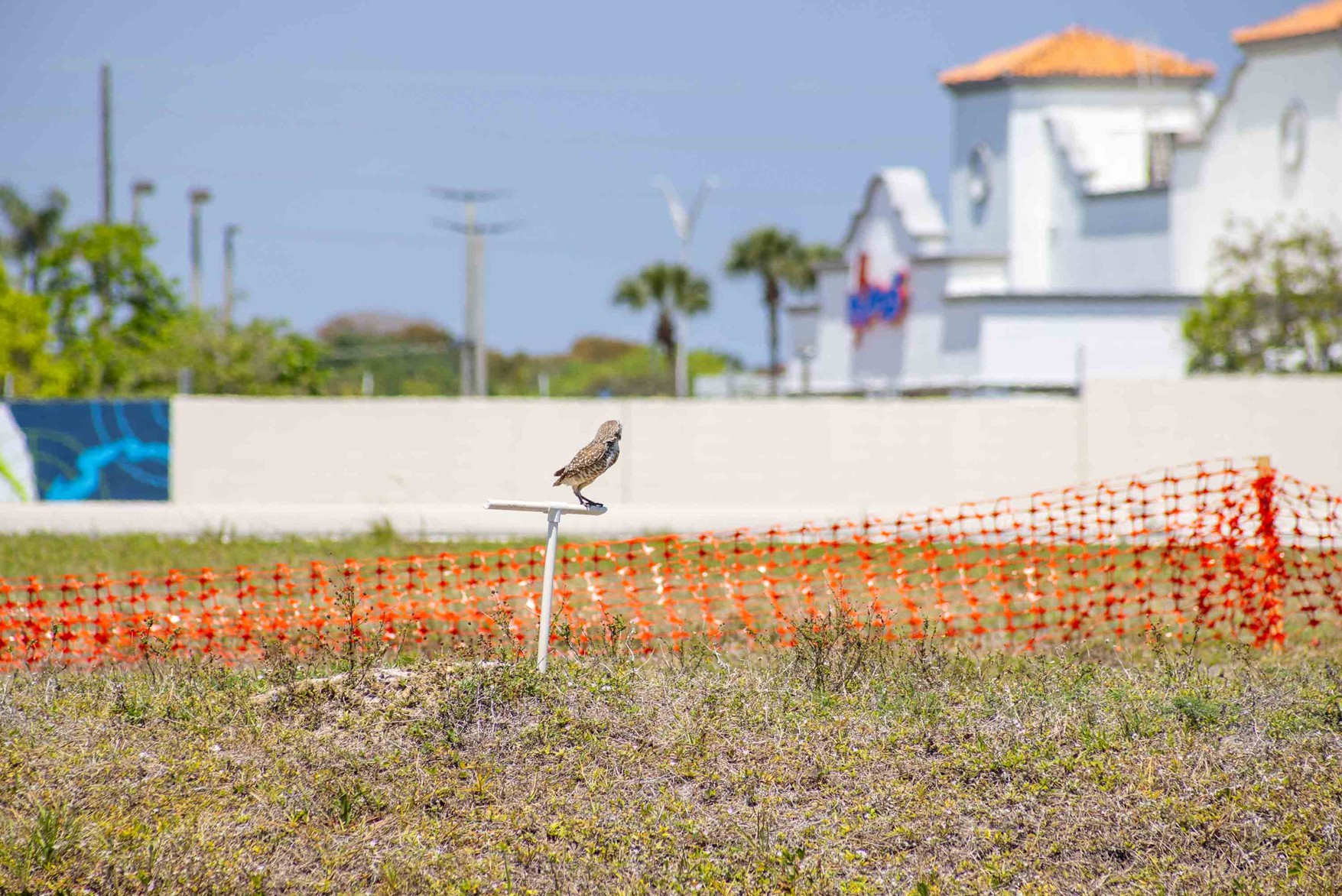
Burrowing Owl breeding season occurs from February 15 through July 10. As the owls pair up and find burrows to raise their young, our team remains vigilant in identifying and protecting these nesting sites. Identifying nests is a crucial part of our Wildlife Hazard Management Plan. This plan establishes structured procedures for monitoring, managing, and mitigating wildlife risks on and around Airport property. Currently, we’ve identified 80 burrows on airport property. Each one is carefully marked so that airport operations do not disturb these areas, allowing the owls to go about their business undisturbed.
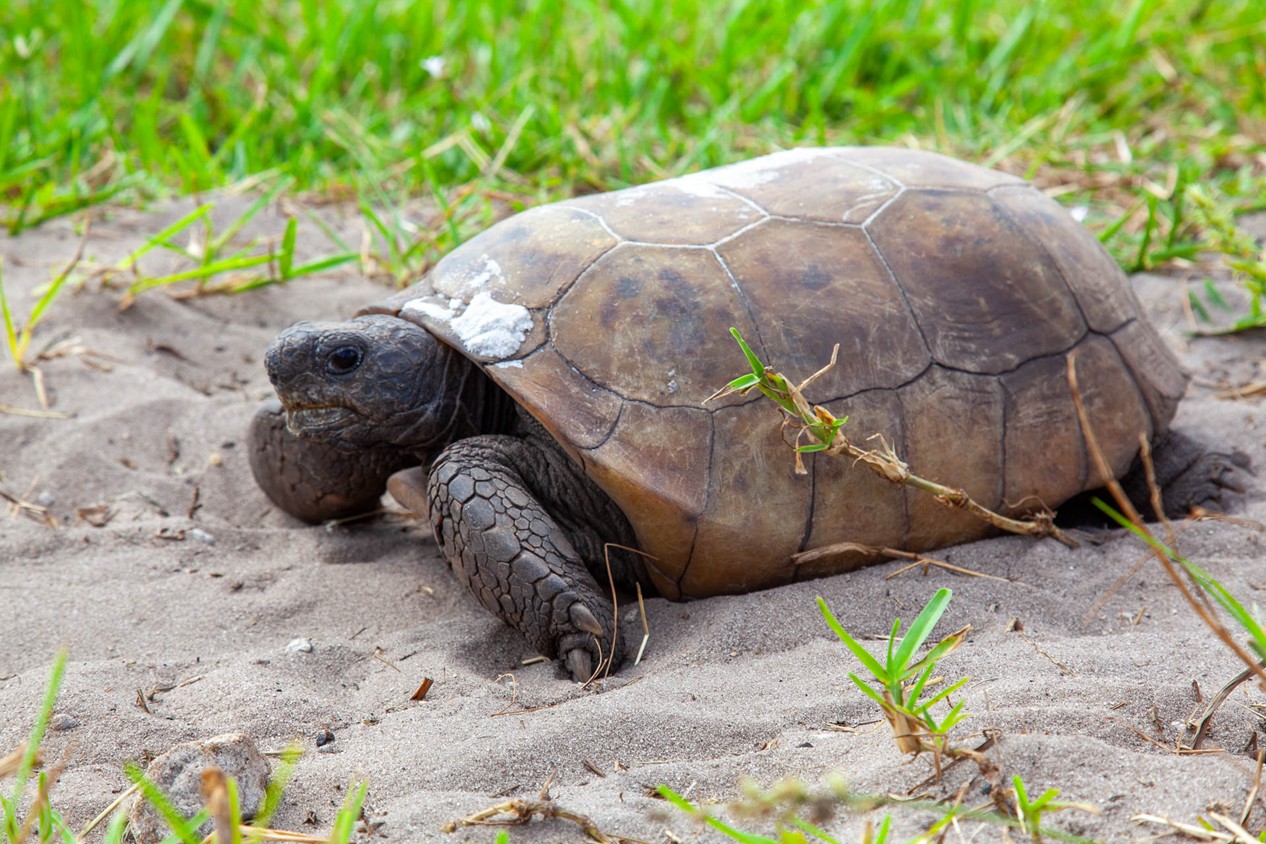
Interestingly, burrowing owls depend on the engineering skills of another remarkable animal: the Gopher Tortoise, a keystone species in Florida’s ecosystems.
Keystone species are those whose presence is vital to the balance of their environment. If removed, the entire ecosystem could be dramatically altered. Gopher tortoises dig extensive burrows, sometimes stretching 15 to 40 feet, that provide shelter for dozens of other species, including the burrowing owl.
This interdependence highlights why conservation is so critical: when one species is threatened, countless others can be affected, showcasing the fragile balance in our local ecosystems.
While the Boca Raton Airport does not have any resident Gopher Tortoises in the field, their unique relationship can be seen at neighboring Florida Atlantic University (FAU).
Burrowing Owls differ quite a bit from the typical owl. Unlike many owl species, these birds are diurnal during the breeding season, meaning they spend much of their time active during the day.
This daytime activity allows them to hunt insects while also keeping an eye on predators and tending to their burrows and chicks.
However, this behavior shifts with the seasons. During the non‑breeding months, Burrowing Owls become more nocturnal, aligning more closely with typical owl behavior when the demands of nesting and raising young decrease.
Wildlife is a constant consideration for Airport Management as it relates to aviation safety. According to the Federal Aviation Administration (FAA) National Wildlife Strike Database, over 19,000 wildlife strikes were reported in 2023 across the United States.
Because of this, birds are actively discouraged from inhabiting Airport property to reduce the probability of a bird strike occurring at the Boca Raton Airport. However, Burrowing Owls do not pose a significant aviation risk due to their ground‑dwelling nature and low‑flight behavior. In fact, these small owls offer a positive ecological presence on the airfield.
Burrowing Owls prey on small reptiles, amphibians, and rodents, helping keep these populations in check. By controlling these smaller species, the owls reduce the attractiveness of airport grounds to larger predators—such as raccoons, snakes, or larger birds of prey—that could pose a more serious hazard to aircraft operations.
Ultimately, conserving the burrowing owl is more than protecting a single species. It reflects our broader responsibility to preserve biodiversity and maintain healthy ecosystems for future generations.
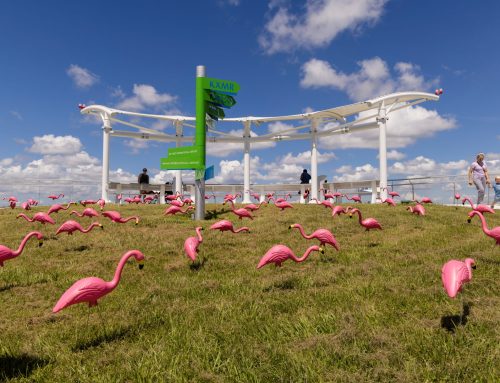
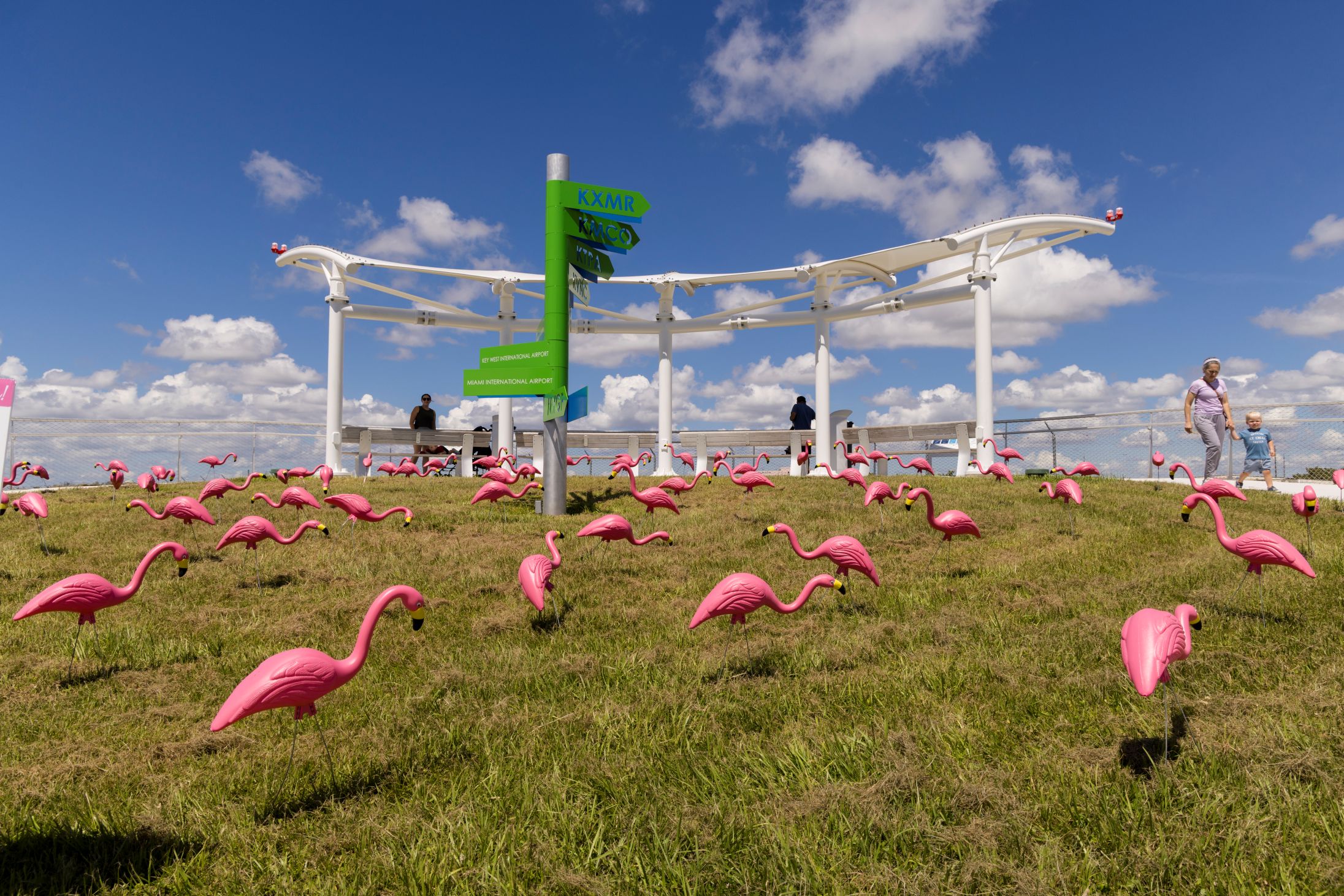
Conservation is a daily commitment, one rooted in awareness, action, and the belief that even the smallest creatures deserve a safe place to call home. To learn more about the burrowing owls and perhaps catch a glimpse of them, visit our Observation Area, which is open daily from sunrise to sunset. Please remember to stay on the pathways and follow the posted signage so as not to disturb the wildlife.